

What's the difference?
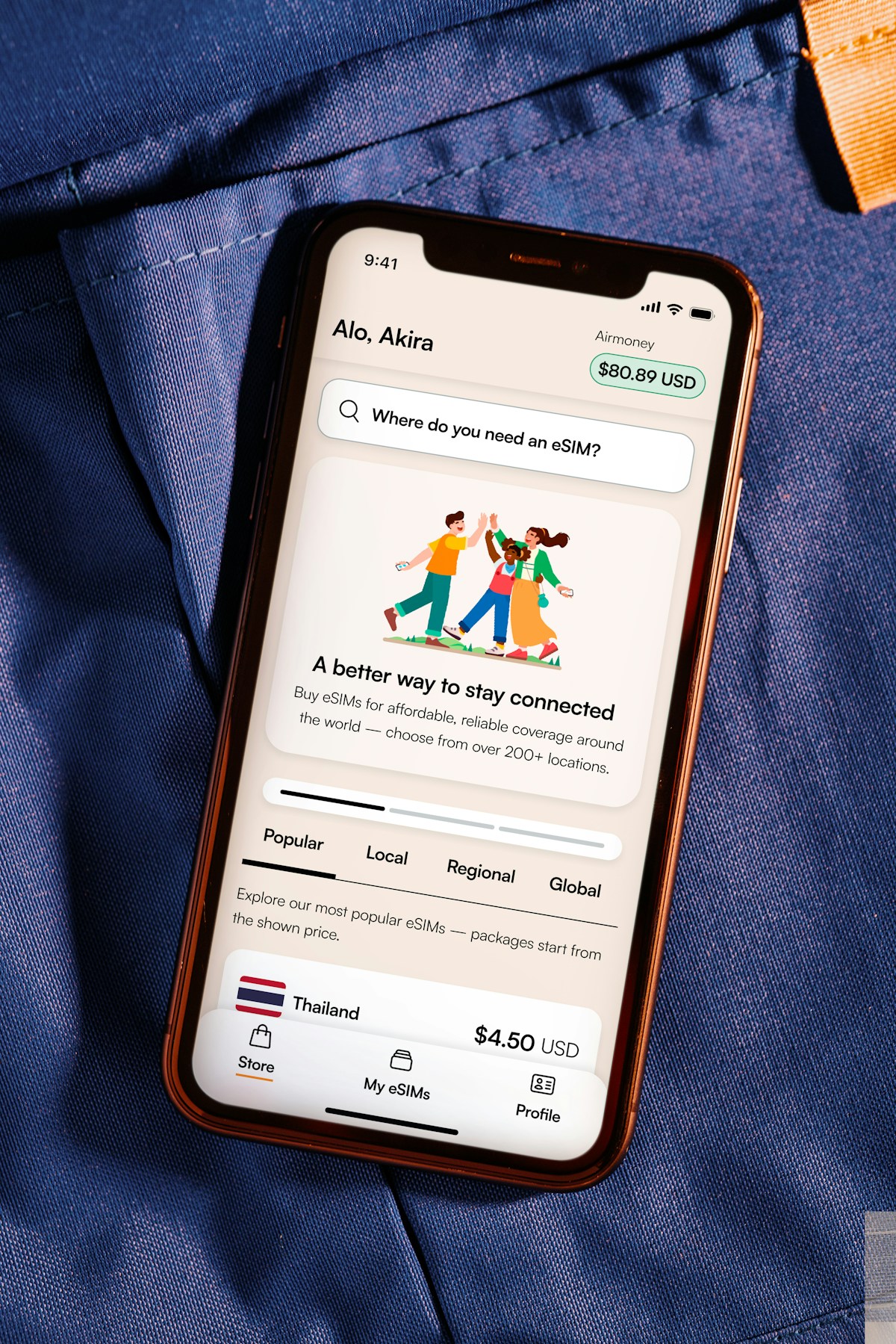
A physical SIM is the small plastic card you insert into your phone. An eSIM (embedded SIM) is built into the device and activated entirely digitally via QR code — with no card swap and no tools.
Functionally they do the same thing: both connect your phone to a mobile network. The difference is purely technical and about convenience — and that convenience matters a lot when traveling, because there's nothing physical left to swap or lose.
The benefits of an eSIM while traveling
With a travel eSIM you're online in minutes, without hunting for a shop abroad or ordering a physical card. You buy the data plan online, get the QR code by email and install the eSIM comfortably from home. Our step-by-step installation guide shows just how quick it is.
Your regular SIM stays active: calls and texts keep running on your main number, while the eSIM handles affordable mobile data at your destination. You stay reachable on your usual number and still browse at a fixed price.
When a physical SIM still makes sense
Very old devices or some entry-level phones don't support eSIM. A network-locked device also can't activate a third-party eSIM. In those cases a physical SIM is the only option.
For almost all modern smartphones from 2018 onward — such as the iPhone XR/XS and many Android devices — the eSIM is the easier, more flexible choice. You can check whether your device is compatible in seconds in our FAQ.
The bottom line for travelers
If you want to travel flexibly, quickly and without roaming surprises, an eSIM is the better bet in most cases. Just check that your device is eSIM-capable and unlocked — then nothing stands between you and mobile internet abroad.
Ready for your next trip? Choose your destination and grab a matching data plan.